
How to Use Science to Master Irrigation Design from Day One
Understanding site-specific variables: sun, slope, soil, and sustainability
You can’t design a high-performance irrigation system without mastering the micro-details of the site. Landscape architects who get this right from day one avoid redesigns, system failures, and client complaints. And it all starts with reading the land like a scientist.
Sun exposure isn’t just about full sun vs. shade. It’s about tracking how light moves across the site during the day and through the seasons. A south-facing slope in London acts very differently from a shaded courtyard in Manchester. Sunlight affects water loss through evapotranspiration (ET), which directly influences how much and how often you irrigate. Ignore it, and you’ll either drown your plants or starve them.
Slope is another silent killer. Water moves—gravity guarantees that. Steep gradients create runoff, shallow ones create pooling. Both waste water and damage root systems. Smart irrigation design uses this slope data to zone systems, adjust emitter flow rates, and stagger watering times. The goal is infiltration, not runoff.
Soil, meanwhile, is your foundation. Sandy soils drain fast and require frequent, low-volume applications. Clay soils retain water longer but are prone to compaction and waterlogging. Loamy soils? They’re the gold standard. But here’s the trick—soil varies even within the same property. That means soil testing should be done in multiple zones, especially in large or complex landscapes.
Now, let’s talk sustainability. Every property developer and architect is looking to tick the ‘green’ box—but sustainability isn’t a buzzword, it’s a science. Sustainable landscaping depends on matching irrigation input with actual plant needs and site-specific constraints. That means integrating native plants, using low-flow systems, and designing for minimal runoff. If you’re not planning with sustainability in mind from the start, you’re building a problem for later.
The real win? When you combine sun, slope, soil, and sustainability, you unlock the data that makes precision irrigation possible. It’s not just about watering plants—it’s about engineering harmony between the built and natural environment.
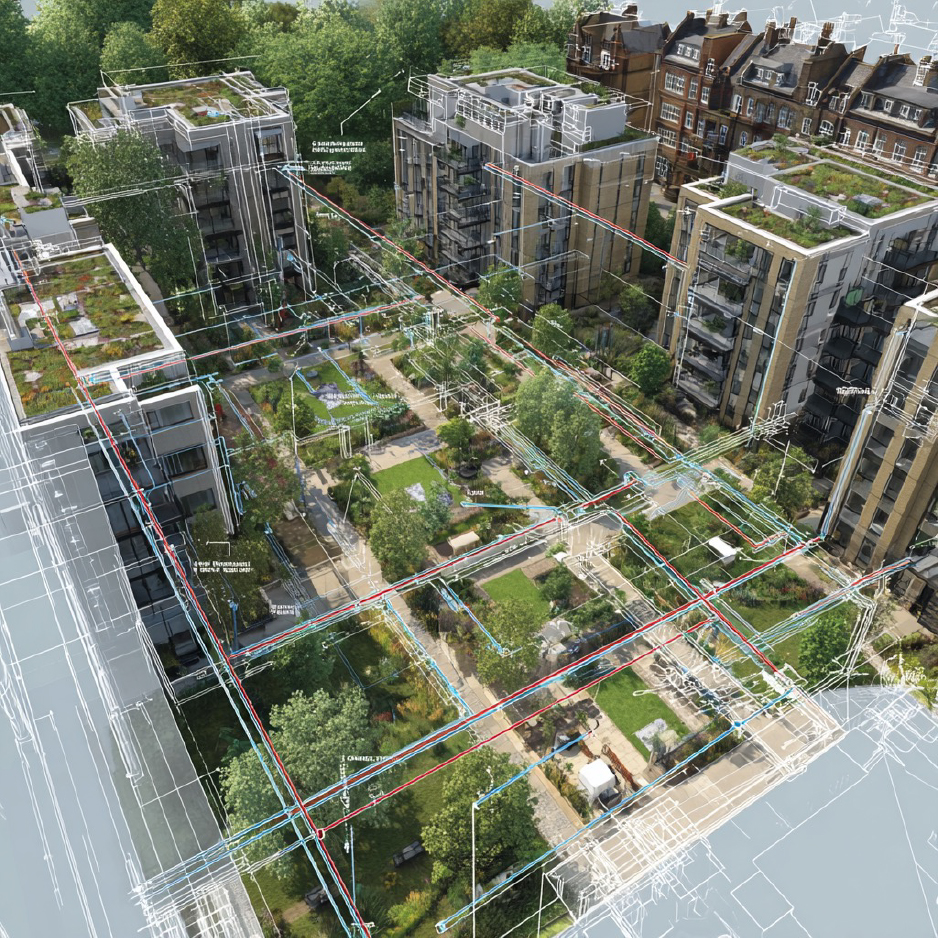
Calculating water demand with precision: evapotranspiration, plant types, and climate data
Guesswork is dead. If you’re still designing irrigation systems based on gut feeling or outdated templates, you’re losing water, money, and credibility. Precision starts with understanding evapotranspiration (ET)—the combined water loss from soil evaporation and plant transpiration. It’s the heartbeat of irrigation design.
ET varies by location, time of year, plant type, and even wind. But the good news? You can get accurate, local ET data from weather stations or smart sensors. Use it. Feed it into your calculations to determine how much water each zone actually needs—not just how much it can hold.
Next, layer in plant types. Turf, native grasses, succulents, shade trees—they all sip water differently. A blanket approach to watering is lazy design. Group plants with similar water needs and design your zones accordingly. That’s hydrozoning. It’s better for water use, plant health, and your reputation.
Climate data is your edge. Historical rainfall, average temperatures, wind speeds, humidity—all of it matters. In areas like the South East, summer droughts are increasingly common. In the North West, sudden downpours can saturate the ground for days. Your irrigation system must adapt to these realities.
Use regional climate models to predict future water needs, not just current ones. Property developers love this because it future-proofs their investment. Architects love it because it aligns with BREEAM and other green building standards. You’ll love it because your system works like a charm, even under stress.
Smart irrigation design means you’re not just reacting to current conditions—you’re anticipating them. And when you do that, you build systems that last.
Integrating smart technology early: sensors, controllers, and automation in the design phase
The biggest mistake in modern irrigation design? Treating technology as an afterthought.
If you’re bringing in sensors and controllers after the pipework is laid, you’ve missed the point. Smart technology isn’t the cherry on top—it’s the core of sustainable, efficient irrigation consultancy. Integration needs to happen at the planning level, not post-installation.
Start with soil moisture sensors. These devices measure the actual water content in the root zone. Not the surface. Not the guess. The roots. They tell the system when to water and when to hold off. That alone can reduce water use by 30–50%. That’s not marketing—that’s field data.
Next up: weather-based controllers. These pull real-time climate data from local stations or on-site sensors. They adjust irrigation schedules based on rainfall, humidity, temperature, and wind. When it rains, the system pauses. When it’s hot and dry, it compensates. It’s predictive irrigation, not reactive.
Automation is where the magic happens. Programmes can be set to irrigate during off-peak hours to reduce evaporation. Zones can be adjusted remotely. Alerts can notify you of leaks, low pressure, or system failures. The result? Fewer call-backs. Happier clients. Healthier landscapes.
But here’s the kicker—when you design with this technology in mind from the beginning, everything fits. Pipe routing supports sensor placement. Controller enclosures are accessible and weatherproof. Power and connectivity are built in, not hacked on. That’s what separates premium consultancy from average.
And let’s not forget system data. Smart irrigation systems generate performance logs. You can analyse them to fine-tune schedules, justify water savings, or support sustainability certifications. That’s gold when you’re presenting to developers or councils.
Designing with smart tech from the ground up doesn’t just make your system better—it makes your work look smarter. And in this industry, perception is reality.
How to Design Irrigation Systems That Perform (and Impress Clients)
Aligning irrigation layout with planting plans for maximum efficiency and aesthetics
Here’s the truth: if your irrigation design doesn’t marry perfectly with the planting plan, the whole landscape suffers—and clients notice. Misaligned zones, inefficient pipe runs, and mismatched emitters all lead to dead plants, soggy patches, and wasted investment. You’ve seen it happen. The good news? You can dodge those bullets early and build systems that deliver both function and form.
Start by knowing your planting palette inside out. Not just names and heights—understand root depths, water tolerances, and seasonal needs. Mediterranean plants, for example, don’t want regular watering once established. Native grasses might need deep watering cycles but infrequently. Grouping plants by hydrozone is not optional—it’s the foundation of a sustainable irrigation layout.
Take the site topography and solar exposure into account when mapping zones. A shaded northeast corner will retain soil moisture longer than a sun-drenched slope on the west. Elevation changes? They impact water pressure—don’t ignore them. Use pressure-regulating valves and check valves, especially where gravity plays a role.
Design your lateral lines to mirror the planting design. Think like a landscape architect, not just a technician. Curved beds, tiered terraces, and mixed-use spaces all demand flexible irrigation lines that trace the contours of planting. That’s how you avoid overspray, runoff, and awkward retrofits. Always keep aesthetics in mind. You don’t want a beautiful perennial border ruined by exposed risers or mismatched spray arcs.
Speaking of spray arcs, match the emitter types to the planting density and shape of the zones. Narrow strips? Use high-efficiency strip nozzles or micro-sprays. Dense shrub massings? Drip lines with built-in pressure-compensating emitters. Groundcovers in full sun? Consider inline drip grids with a 12” spacing.
Don’t forget visibility. Clients care about what they see. Ensure heads are flush with grade, concealed when needed, and spaced to avoid “donut” patterns. Hidden performance is the best kind—when the system disappears, but the results are show-stopping.
This is how you elevate irrigation design from background infrastructure to front-line performance. When the watering matches the planting like a tailored suit, you don’t just save water—you win repeat contracts.
Specifying emitters and components that match plant needs and site complexity
Emitters are not one-size-fits-all. They’re precision tools. Choose the wrong one, and you’ll either drown the planting or starve it. Choose right, and you hit the sweet spot—healthy growth with minimum input. It starts with understanding the delivery methods that work best for each plant type in each micro-setting.
Trees? Go with deep root watering systems or heavy-flow point emitters. Shrubs? Use 2 L/h or 4 L/h pressure-compensating drippers, spaced according to canopy spread. Groundcovers? Inline drip tubing with closer emitter spacing—say, 30cm—gives better uniformity.
Don’t just think about plant type—think about soil. Sandy soils drain fast and need more frequent watering at lower volumes. Clay soils hold water longer but risk compaction and runoff. Loamy soils are your gold standard. Adjust emitter flow rates accordingly. For sandy soils, consider multi-outlet emitters or bubblers that pulse rather than saturate.
Site complexity matters too. Slopes? Use check-valve heads to prevent low-point drainage and erosion. Mixed sun and shade zones? Separate them into distinct irrigation zones. Urban rooftop? Go with low-flow drip systems to avoid weight issues and runoff. High-traffic commercial space? Bury drip systems under mulch or artificial turf. Hidden and safe.
Now let’s talk hardware. Use components with proven reliability—brands that offer pressure regulation and filtration built in. Retrofit projects? Use adjustable emitters to fine-tune performance over time. New builds? Install flow sensors and master valves from the start. It’s the difference between reactive servicing and proactive water management.
The real win is in combining smart emitters with smart controllers. Wi-Fi-based systems that adjust watering based on local weather data, plant types, and soil sensors. You get precision and adaptability. Your clients get lower water bills and greener landscapes.
Site-specific emitter selection is where science meets strategy. It’s not just about delivering water—it’s about delivering results. Want to go deeper? The full Smart Irrigation Design for Sustainable Landscapes guide breaks down system selection across project types.
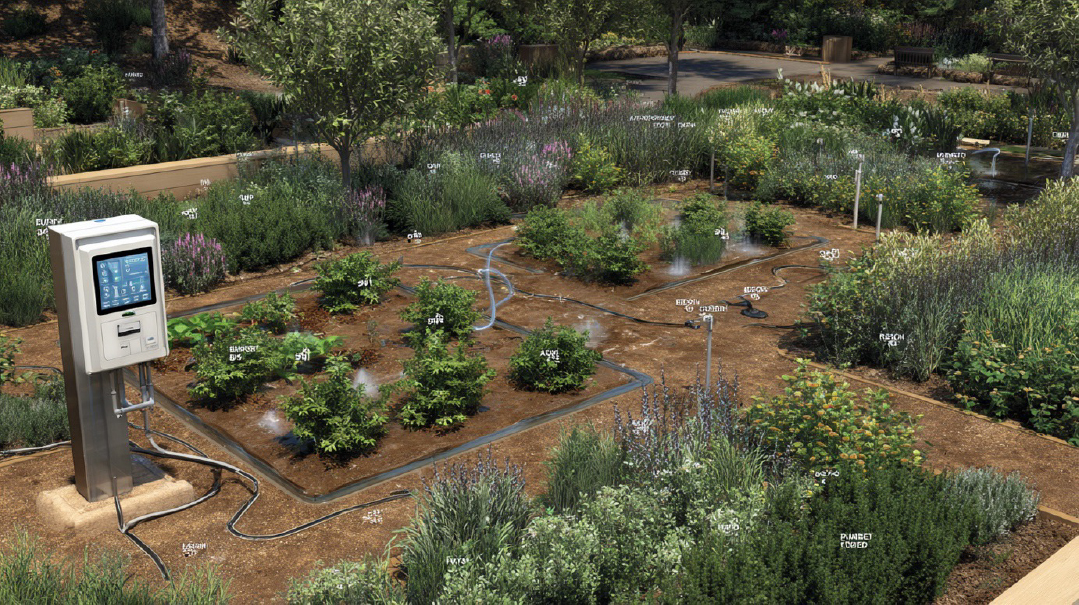
Building in flexibility: allowing for future growth, zoning upgrades, and system scaling
Here’s a mistake many make: designing a rigid irrigation system that’s perfect for day one and obsolete by year five. Landscapes evolve. Trees grow. Properties extend. Usage patterns change. If your irrigation design doesn’t flex with the site, it fails.
Start by designing for modularity. Think of each irrigation zone as a standalone circuit that can be upgraded independently. Use swing joints for risers so heads can be repositioned without digging up the zone. Add extra capacity in your control system—more stations than you need today. Leave capped tees in key locations for future extensions.
Pipe sizing is critical. Undersized laterals limit future flexibility and cause pressure drop. Oversized mains may cost more upfront but allow for system scaling. Always plan for peak demand, not average. Tomorrow’s food forest or rooftop terrace might double the water requirement.
Use zoning logic that’s intuitive. Group beds that will age similarly. Trees in one zone, turf in another, perennials in a third. That way, when the trees mature and need less water, you can dial their zone back without affecting the rest.
Build in redundancy. Dual-valve manifolds allow for quick reconfiguration. Master valves protect against leaks and isolate faults. Flow sensors help you detect anomalies before they become disasters. All this makes system scaling easier, safer, and client-friendly.
Tech evolves too. Today’s smart controller may be outdated in five years. Choose systems that are firmware-upgradable and supported by open platforms. That way, you’re not locked into a proprietary solution. Your clients will thank you when it’s time for an upgrade.
Don’t forget access. Control boxes should be accessible but discreet. Valve boxes should be easy to locate and large enough to service. Mainline shutoffs must be clearly marked. Design with the future service tech in mind—it might be you, or it might be someone else.
Infill development? Plan for it. Leave conduit for wires. Stub out extra zones. Use isolation valves to segment the system cleanly. When the next phase of the property is built, you won’t be cutting into live lines with a prayer and a shovel.
Flexibility in irrigation design is not a luxury—it’s a requirement for sustainable landscaping. When systems are built to adapt, they last longer, cost less to maintain, and perform better across the lifecycle of the landscape. And that’s exactly what clients expect from a top-tier irrigation consultancy.
How to Avoid the Most Expensive Mistakes in Irrigation Consultancy
Preventing overwatering and underwatering through data-informed scheduling
Overwatering and underwatering are the silent killers of even the best designed landscapes. You can have a stunning planting plan, the right emitters, and a solid system layout — and still watch a garden struggle, fail, or cost more than it should to maintain. The problem? Poor scheduling. And it’s almost always because the schedule isn’t tied to real data.
This is where a lot of irrigation systems fall over. You don’t want to guess how much water your planting needs. You need to know. The variables that matter are evapotranspiration (ET), soil texture, root depth, and plant type. ET tells you how much water is evaporating from the soil and transpiring from the plants. If you’re not basing your irrigation schedule on local ET data, you’re flying blind.
For landscape architects and developers, this is about protecting your investment. A system that overwaters will drive up water bills, cause root rot, promote disease, and leach nutrients from the soil. Underwatering? That leads to stunted growth, plant loss, and a landscape that never looks as good as it did on the render.
Smart scheduling uses meteorological data, soil moisture sensors, and flow meters to create a responsive system. Modern irrigation controllers can now be programmed with real-time weather updates. That means if it rains, the system holds back. If it’s hot and dry, it compensates. The days of fixed, timer-based watering are over. They waste water, they frustrate maintenance teams, and they make your design look bad.
You also need to think about the root zone. A system should deliver water to the depth where plants can access it. That changes depending on soil type and plant selection. Shallow watering encourages surface roots and weak plants. Deep, infrequent watering builds resilience. The schedule needs to match your planting plan — not just for day one, but for how the landscape will mature over time.
This is where data-informed scheduling becomes your secret weapon. It lets you fine-tune water delivery, reduce waste, and ensure plant health. It’s not just good science — it’s good business. Especially when clients start asking for sustainability credentials, certifications, or LEED points. Efficiency is no longer optional. It’s expected.
Avoiding design flaws that lead to uneven distribution and wasted resources
Uneven water distribution is the equivalent of bad lighting in interior design. It ruins the whole effect. Dry patches, soggy zones, plants dying in one corner while others thrive — it’s a red flag for poor irrigation design. And it usually comes down to one of two things: poor pressure management or mismatched components.
Water doesn’t move magically through a system. It follows physics. Pipe diameter, elevation change, emitter flow rate, and run length all affect pressure. If you don’t balance the hydraulics, you’ll get inconsistent output. That means some areas get too much water, others not enough. The result? Plant stress and wasted resources.
Many systems fail because they treat emitters and heads like plug-and-play components. But not all emitters are created equal. Some are pressure-compensating, others aren’t. Some are designed for slope, others for flat ground. If you mix and match without understanding flow characteristics, you’ll get uneven coverage. And once the system’s in the ground, fixing it is expensive.
For landscape architects, this isn’t just about performance — it’s about protecting your design intent. You specified plants for a reason. Colour, texture, form, seasonal interest. But if the irrigation system can’t support those choices, the entire aesthetic is compromised. It’s not just about keeping plants alive. It’s about helping them thrive in the way you envisioned.
Wasted water is also a reputational issue. Property developers are under pressure to meet sustainability benchmarks. An irrigation system that squanders water isn’t just inefficient — it’s an environmental liability. With councils and planning authorities pushing for water-sensitive urban design (WSUD), you need systems that can deliver with precision.
Design flaws also show up in zoning. If you lump sun-loving natives and thirsty ornamentals into the same zone, someone’s going to suffer. Smart zoning separates plant types by water requirement. That lets you fine-tune your schedule and avoid blanket watering. The result? Healthier plants, lower water bills, and a landscape that performs exactly as you intended.

Mitigating long-term maintenance issues with durable materials and logical pipe routing
Maintenance is where most irrigation systems become a headache. What looks clean and efficient on paper can quickly turn into a labyrinth of buried problems if the right materials and routing strategies aren’t used from day one.
Start with materials. Not all pipes, joiners, or valves are created equal. Cheap materials degrade faster, crack under pressure, or get brittle in UV. That means more leaks, more repairs, and more money spent down the line. You want UV-resistant, high-density polyethylene (HDPE) or cross-linked polyethylene (PEX) for long runs. Solvent-weld PVC is fine for certain applications, but consider the environment — freeze-thaw cycles, soil acidity, and root intrusion can all reduce lifespan.
Valve boxes should be accessible, not buried under shrubs or hardscape. Mainline pipes should follow logical routes with minimal bends. Every additional elbow reduces pressure and increases the chance of a break. Use sweep bends where possible. Avoid sharp turns. Think like a plumber, not just a designer.
Pipe routing should also allow for future access. If a developer wants to expand a garden bed or introduce a new planting scheme, can the system adapt? Can new zones be added without tearing up paving or lawn? Can maintenance crews isolate a section without shutting down the whole system?
Smart consultants build in redundancy. That means including spare capacity in the controller, oversized conduit for future wiring, and extra sleeves under paths for new pipes. It costs a little more upfront, but saves thousands in retrofit costs. It also reduces disruption to the landscape. No one wants to dig up a finished garden to fix a leak or add a new line.
You also need to think about filtration. Dirty water wrecks emitters. Whether you’re using mains, bore, or recycled water, inline filters protect the system. And they need to be accessible for cleaning. Same with pressure regulators — they should be matched to emitter specifications and installed where they’re easy to reach.
Logical pipe routing isn’t just about maintenance — it’s also about diagnostics. When something goes wrong, can a technician trace the issue quickly? Are the zones labelled? Are there plans showing layout and component specs? A well-documented system reduces downtime and keeps the landscape looking its best year-round.
If you’re designing for large or complex sites — mixed-use developments, public parks, high-end residential — this matters even more. These landscapes demand systems that are resilient, intuitive, and built for longevity. That means starting with the right materials, planning for access, and designing with the end user in mind.
For landscape architects, architects, and property developers looking to level up their irrigation performance, the solution isn’t more gear — it’s smarter planning. Avoid the most common (and costly) mistakes by designing systems that are driven by data, tailored to plant needs, and built to last.
Our approach is very different. We design irrigation systems by starting with the fundamentals: the plant–soil–water relationship. We look closely at how water moves through the soil, how plants actually access it, and how local conditions — sun, shade, wind, aspect, and microclimate — affect demand.
By grounding our designs in science rather than habit, we create irrigation systems that are efficient, resilient, and finely tuned to the landscape they serve. Every emitter, every pipe run, every zone is designed with purpose, not guesswork.
For landscape architects, that means confidence that your planting will thrive and that your design intent won’t be compromised by inappropriate or heavy-handed irrigation. For developers, it means systems that are cost-effective to run, conserve water, and stand up to scrutiny when sustainability is under the spotlight.
In short: we design irrigation that works with the landscape, not against it — using science, not tradition, to deliver healthier plants, lower water use, and more reliable outcomes. Learn more and get started at (https://irrigation-engineers.co.uk )