The Project
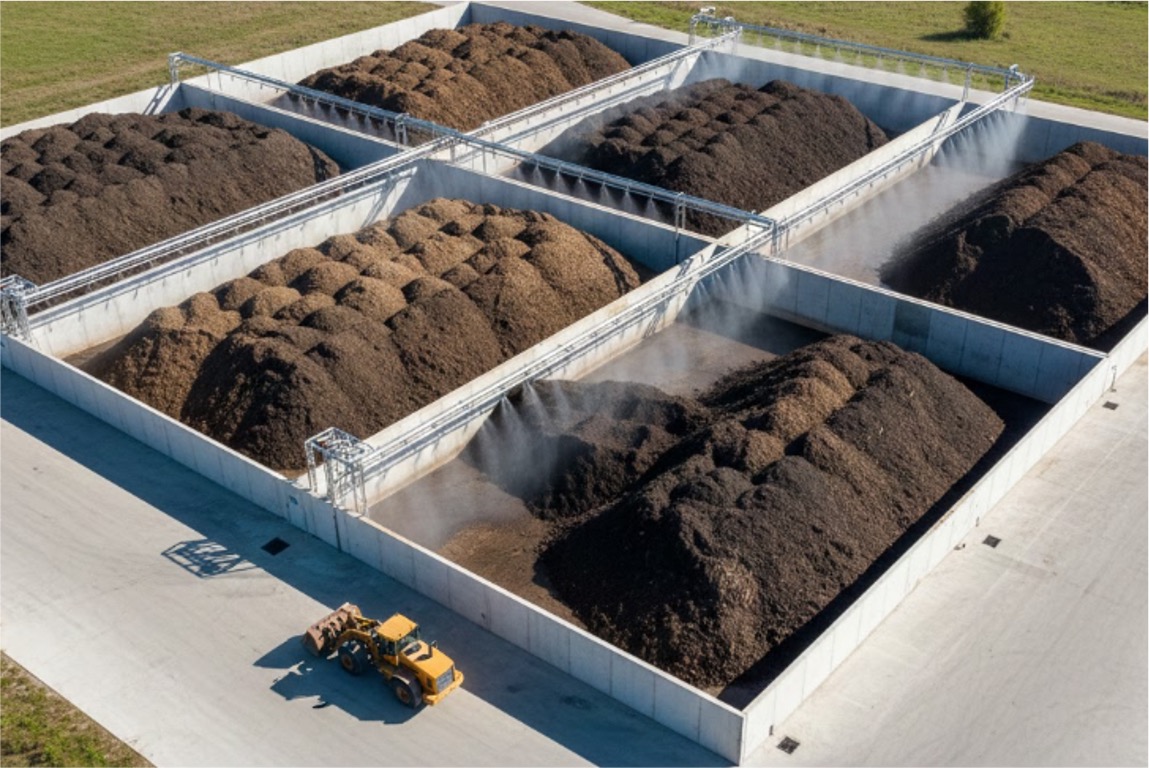
The dung clamps site is a rectangular yard divided by walls into six bays, each used as a compost stockpiling area. Each bay has an area of approximately 550 m² of dung and organic material.
The bays are open to the elements, so they experience full variation in temperature, solar gain and wind.
In hotter and drier months, the surface of the compost heaps can become very dry while microbial activity continues within the pile. This combination of dry outer layers and heat build-up inside the clamp is what drives the fire risk.
Operationally, the site must accommodate machinery for loading, turning and removing compost, as well as routine vehicle movements. Any irrigation system therefore has to sit above the working area or be tucked into corners, without obstructing access or being vulnerable to damage from equipment.
Our approach and thinking
We approached the problem as a fire risk and process control issue rather than a conventional landscape irrigation exercise. The primary objective was to make it easy for operators to wet each bay thoroughly and quickly, without complex manual intervention.
Given the rectangular layout and six-bay division, we looked for a repeating arrangement that could be standardised across all bays. This would simplify design, installation and ongoing operation. Rotating overhead devices, capable of covering each bay from its outer corners, offered a practical way to achieve even coverage with a relatively small number of heads.
Runoff management was considered at the same time as distribution. If water was simply discharged to the yard, it would increase consumption, introduce slip hazards and potentially cause localised ponding. We therefore set out to create a recirculating system where sprayed water that drains from the heaps is collected, returned to a storage tank and reused.
Throughout, our aim was to give the client a system that is robust, easy to understand and focused directly on its safety function: reducing the likelihood of compost pile fires.
The Irrigation Solution
Pumping and water recirculation
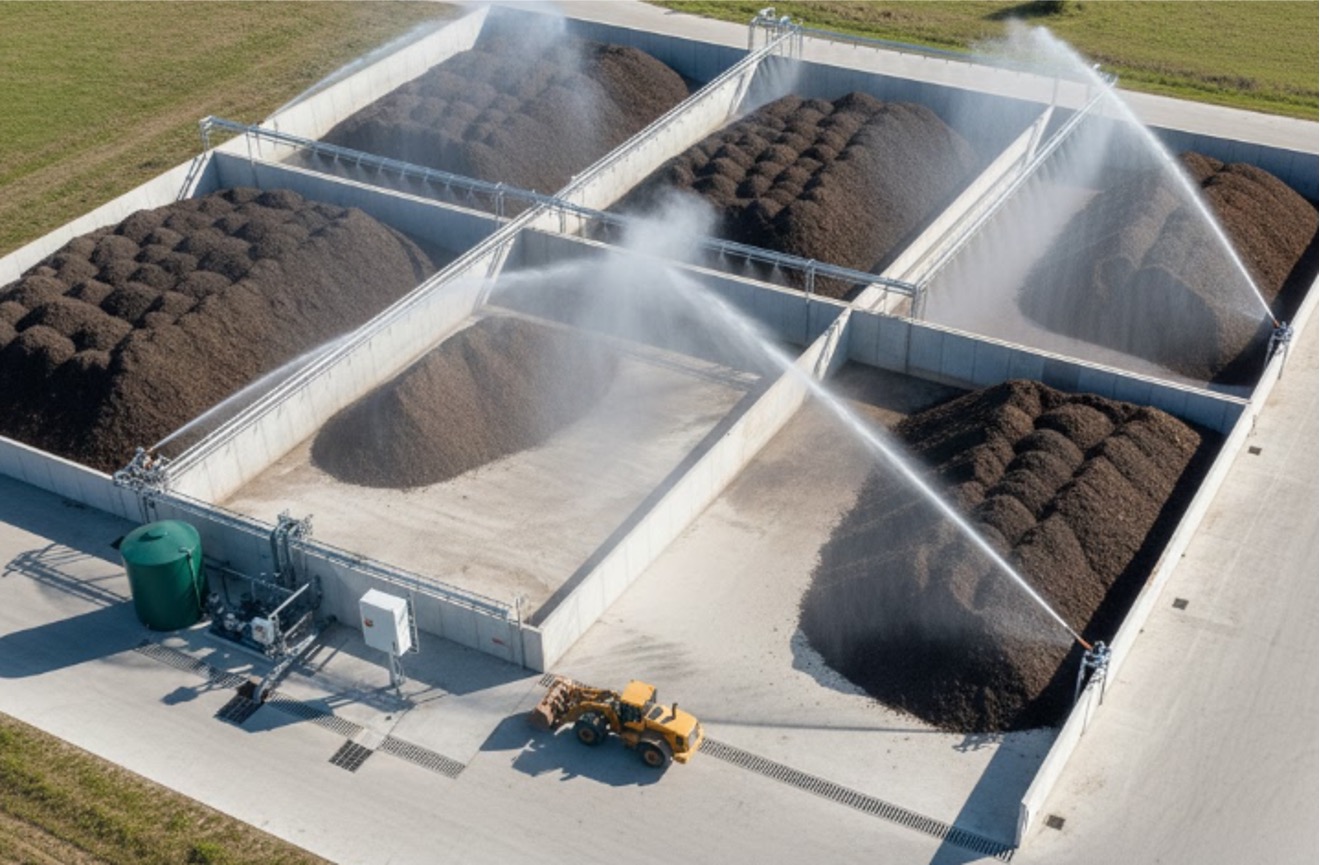
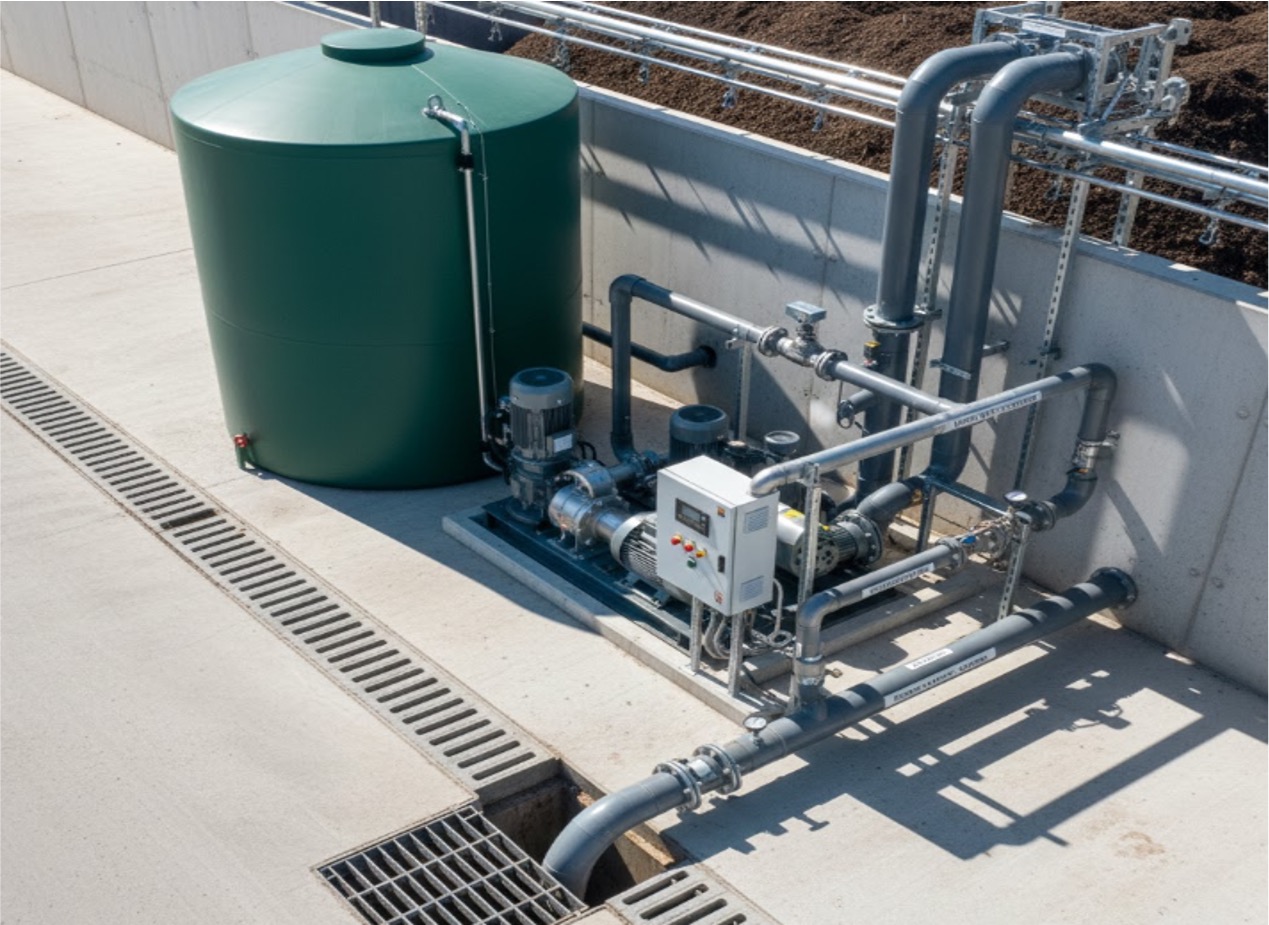
The system is based on a dedicated pumping arrangement feeding an overhead sprinkler network. Water is drawn from a storage tank, pressurised by the pump set and delivered to the rain gun sprays above the compost bays. After spraying, excess water drains off the compost heaps into the yard drainage, is directed to a drain pit and then recirculated back to the tank.
This recirculating arrangement reduces overall water consumption and keeps the system largely closed, subject to topping up for evaporation and process losses. It also means that operators do not have to manage separate disposal routes for runoff.
Bay layout and spray coverage
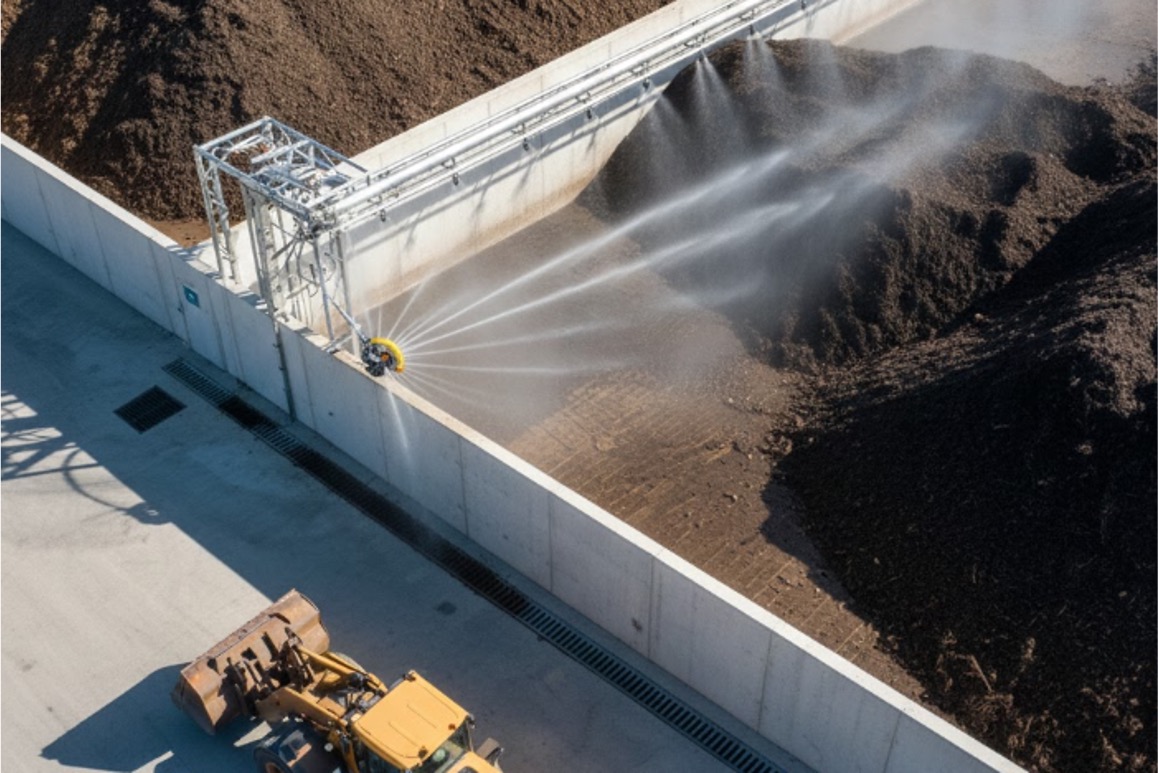
Each of the six bays is fitted with two rain gun sprays, mounted at the two outer corners of the bay. They are configured to operate in a double quarter-circle spray pattern, so together they cover the full area of the compost pile from two directions. Each rain gun has a flow rate of about 2.21 litres per second, so each bay receives a combined flow of approximately 4.4 litres per second when both sprays are running.
This arrangement delivers an even application of water across the pile surface, wetting down the material until it is sufficiently moist to reduce fire risk. The use of corner-mounted equipment keeps the central working zone clear for machinery.
Operation and control
The system is designed for automatic operation, with control sequences that allow each bay to be irrigated in turn or in defined groups, depending on pumping capacity and operational preference. Run times per bay can be adjusted to reflect seasonal conditions and the moisture state of the compost, but the operating principle remains simple: run the sprays until the pile is wet through and then allow runoff to drain back to the collection pit.
Controls and valves are located outside the immediate working area of the clamps, so operators can start and stop irrigation without entering active loading or turning zones. The system concept allows for integration with time clocks or simple manual start sequences, depending on the client’s preferred operating model.
Maintainability and robustness
Equipment selection and positioning are geared towards reliability in a challenging environment. Rain guns are mounted clear of vehicle paths but accessible for maintenance. Pipework is routed and supported to minimise the risk of impact damage, and isolation valves are provided so that individual bays can be taken offline if repairs are needed without shutting down the entire system.
The recirculation tank and pump assembly are designed as a compact, serviceable unit, making it easier for the client to plan periodic inspections and any future upgrades.
Results and Value
Reduced fire risk in compost heaps
By making it straightforward to wet down dung clamps across all six bays, the system helps maintain moisture levels and reduces the likelihood of spontaneous combustion in hot, dry conditions.
Efficient use of water
Runoff is collected in a drain pit and recirculated back to the storage tank, limiting water wastage and avoiding uncontrolled discharge into the yard.
Clear basis for future enhancement
The pumped, recirculating architecture provides a foundation for adding more advanced controls or monitoring in future, should the client choose to do so, without changing the basic layout.
Minimal disruption to yard operations
Corner-mounted sprays and carefully routed pipework keep central working areas clear, so machinery can continue to load, turn and remove compost without obstruction.
Simple, repeatable operation
A standardised two–rain gun layout per bay, combined with a clear operating sequence, gives site staff a predictable process they can follow as part of routine operations.